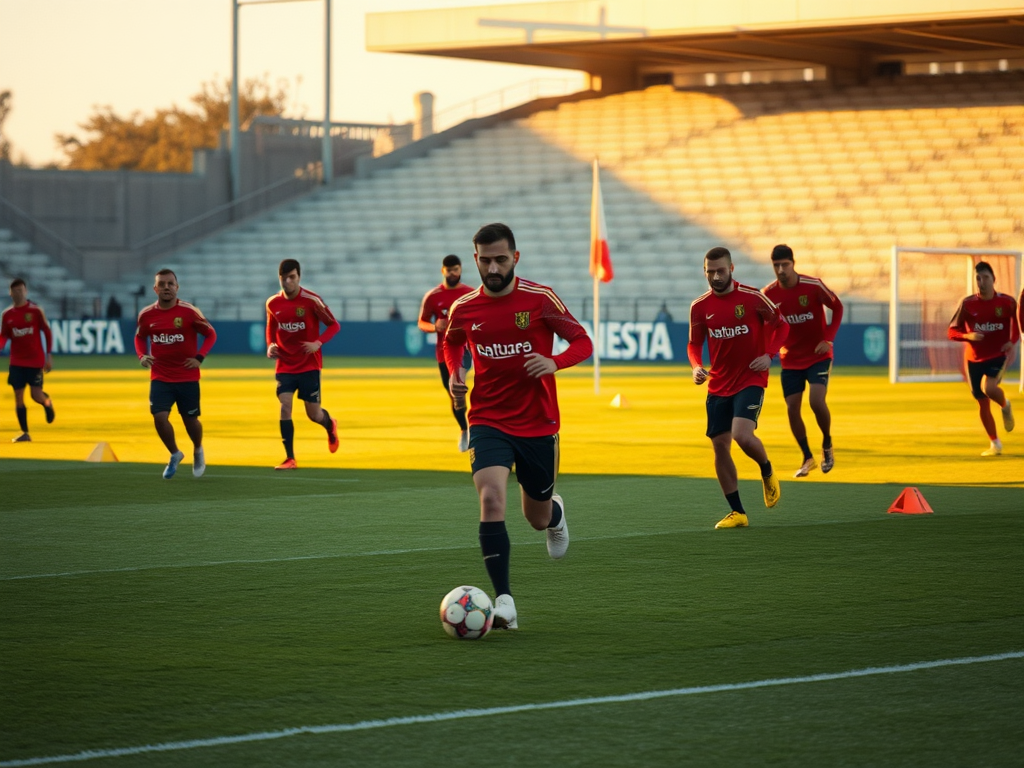
Carvajal y el legado de una generación
La noticia de que Dani Carvajal no formará parte de la lista preliminar de 55 jugadores seleccionados por Luis de la Fuente para el Mundial de la FIFA 2026 ha sacudido el mundo del fútbol español. Este anuncio marca el fin de una era para un jugador que ha sido una columna vertebral del equipo en múltiples competiciones internacionales. Carvajal, con su estilo de juego agresivo y su capacidad para aportar tanto en defensa como en ataque, ha sido fundamental en el éxito de La Roja en los últimos años.
La decisión de dejarlo fuera no solo resalta la evolución del fútbol español, sino también la necesidad de nuevas caras que puedan llevar al equipo hacia adelante. Si bien su experiencia y liderazgo son invaluables, la transición hacia una nueva generación es inevitable. La inclusión de jugadores más jóvenes podría ser la clave para revitalizar un equipo que busca recuperar su estatus de élite mundial.
¿Qué significa esto para La Roja?
La exclusión de Carvajal es un reflejo del cambio que enfrenta La Roja. La era dorada que comenzó en 2008, con la victoria en la Eurocopa, seguida por la consagración en el Mundial de 2010, y la Eurocopa 2012, ha dejado una huella imborrable en la historia del fútbol español. Sin embargo, los tiempos han cambiado. La selección española necesita adaptarse a un panorama competitivo que cada vez es más exigente.
En este contexto, la ausencia de Carvajal permite a otros jugadores demostrar su valía. Este es un momento crucial para talentos emergentes como Pedro Porro y Jose Gaya, quienes tienen la oportunidad de dejar su marca. La selección necesita renovar su plantilla y encontrar la química adecuada para afrontar el reto que representa el Mundial de 2026.
La presión sobre Luis de la Fuente
Luis de la Fuente, el actual entrenador de España, enfrenta una presión considerable para construir un equipo que pueda competir al más alto nivel. La decisión de excluir a Carvajal sugiere que está dispuesto a tomar decisiones difíciles, priorizando el futuro del equipo sobre la nostalgia por jugadores veteranos.
Con la mirada puesta en el Mundial, De la Fuente deberá evaluar cuidadosamente a los candidatos para llenar el vacío dejado por Carvajal. Esto implica no solo considerar el rendimiento actual de los jugadores, sino también su potencial a largo plazo. De la Fuente necesita construir un equipo que no solo sea competitivo ahora, sino que también tenga la capacidad de evolucionar con el tiempo.
Reacciones de los aficionados
La reacción de los aficionados ante la ausencia de Carvajal ha sido mixta. Algunos comprenden la necesidad de un cambio, mientras que otros lamentan la partida de un jugador que ha sido un pilar en la defensa de la selección. Las redes sociales han estallado con opiniones, desde la tristeza y nostalgia hasta la esperanza por lo que está por venir.
- Sentimientos de tristeza: Muchos aficionados sienten que se cierra un capítulo importante en la historia reciente de España.
- Expectativa por nuevos talentos: Hay un sentido de emoción al ver a qué nuevos jugadores se les dará la oportunidad de brillar.
- Debate sobre la experiencia: Algunos creen que la experiencia de Carvajal podría haber sido crucial en un torneo de la magnitud del Mundial.
El contexto del Mundial de 2026
El Mundial de 2026 se presenta como un desafío monumental para todos los equipos, y España no es la excepción. Con una competencia feroz de selecciones como Francia, Brasil y Argentina, el equipo español necesita encontrar su identidad rápidamente. La falta de jugadores experimentados podría ser tanto una bendición como una maldición.
La estrategia de De la Fuente debe enfocarse en crear un equipo cohesivo que pueda adaptarse a diferentes estilos de juego. Los partidos de preparación serán vitales para probar combinaciones y tácticas que maximicen el potencial del grupo. Los nuevos jugadores deben integrarse sin problemas para que España no solo compita, sino que aspire a llegar lejos en el torneo.
¿Qué sigue para Carvajal y para España?
La ausencia de Dani Carvajal de la lista de convocados para el Mundial no significa que su carrera haya terminado. A menudo, los jugadores experimentan altibajos a lo largo de sus trayectorias, y con apenas 31 años, Carvajal podría volver a ser considerado en futuras convocatorias si logra recuperar su forma y demostrarse a sí mismo y a los seleccionadores que aún tiene mucho que ofrecer.
Para la selección, el verdadero trabajo comienza ahora. Se avecinan amistosos y competiciones previas al Mundial donde los nuevos talentos tendrán la oportunidad de demostrar su valía. La historia de La Roja está lejos de terminar; el futuro podría ser brillante si se toman las decisiones adecuadas.
---
Carvajal's Departure: A Shift in Spanish Football
The news of Dani Carvajal's exclusion from the preliminary 55-player list selected by Luis de la Fuente for the FIFA World Cup 2026 has sent shockwaves through the Spanish football community. This announcement signifies the end of an era for a player who has been a cornerstone of the team in multiple international competitions. Carvajal's aggressive style of play and ability to contribute defensively and offensively have been crucial to La Roja's success in recent years.
The decision to leave him out not only highlights the evolution of Spanish football but also the need for fresh faces to propel the team forward. While his experience and leadership are invaluable, the transition to a new generation is inevitable. The inclusion of younger players might be key to revitalizing a team that aims to reclaim its elite status on the world stage.
What this means for Spain
Carvajal's omission is a reflection of the changing landscape facing La Roja. The golden era that began in 2008, with victory in the Euro, followed by the crowning achievement in the 2010 World Cup, and the 2012 Euro, has left an indelible mark on Spanish football history. However, times have changed. The Spanish national team needs to adapt to an increasingly competitive landscape.
In this context, Carvajal's absence allows other players to showcase their abilities. This is a critical moment for emerging talents like Pedro Porro and Jose Gaya, who now have the chance to make their mark. The national team needs to renew its roster and find the right chemistry to tackle the challenge posed by the World Cup in 2026.
The Pressure on Luis de la Fuente
Luis de la Fuente, the current coach of Spain, faces significant pressure to build a team that can compete at the highest level. The decision to exclude Carvajal suggests that he is willing to make tough choices, prioritizing the team's future over nostalgia for veteran players.
With the World Cup in sight, De la Fuente must carefully evaluate the candidates to fill the gap left by Carvajal. This involves not only considering the current performance of players but also their long-term potential. De la Fuente needs to construct a squad that is not only competitive now but also has the ability to evolve over time.
Fan Reactions
Reactions from fans regarding Carvajal's absence have been mixed. Some understand the need for change, while others mourn the departure of a player who has been a pillar in the national team's defence. Social media has erupted with opinions, ranging from sadness and nostalgia to hope for what lies ahead.
- Sadness: Many fans feel that an important chapter in Spain's recent history has closed.
- Anticipation for New Talents: There is a sense of excitement about which new players will be given the chance to shine.
- Debate Over Experience: Some argue that Carvajal's experience could have been crucial in a tournament as significant as the World Cup.
The Context of the 2026 World Cup
The 2026 World Cup poses a monumental challenge for all teams, and Spain is no exception. With fierce competition from nations like France, Brazil, and Argentina, the Spanish team needs to quickly find its identity. The lack of experienced players could be both a blessing and a curse.
De la Fuente's strategy must focus on creating a cohesive team that can adapt to various playing styles. Preparation matches will be vital to test combinations and tactics that maximize the group's potential. New players must integrate seamlessly so Spain not only competes but also aspires to go far in the tournament.
What's Next
Dani Carvajal's absence from the World Cup squad doesn't mean his career is over. Often, players experience ups and downs throughout their careers, and at just 31 years old, Carvajal could be considered again for future call-ups if he can regain his form and prove to himself and selectors that he still has much to offer.
For the national team, the real work begins now. Friendlies and competitions leading up to the World Cup are on the horizon where new talents will have the opportunity to prove their worth. The story of La Roja is far from over; the future could be bright if the right decisions are made.