The 1964 European Championship is a fundamental chapter in the history of La Roja, a tournament that not only solidified the talent of Spanish football but also embodied a time of hope and unity for the country. Held in Spain, this championship took place at a crucial moment, with the nation still recovering from the aftermath of the Civil War. The team, led by the legendary coach José Villalonga, featured a mix of young talents and experienced warriors of the ball, such as Francisco Gento, the great winger from Real Madrid, and the era's top scorer, Ferenc Puskás.
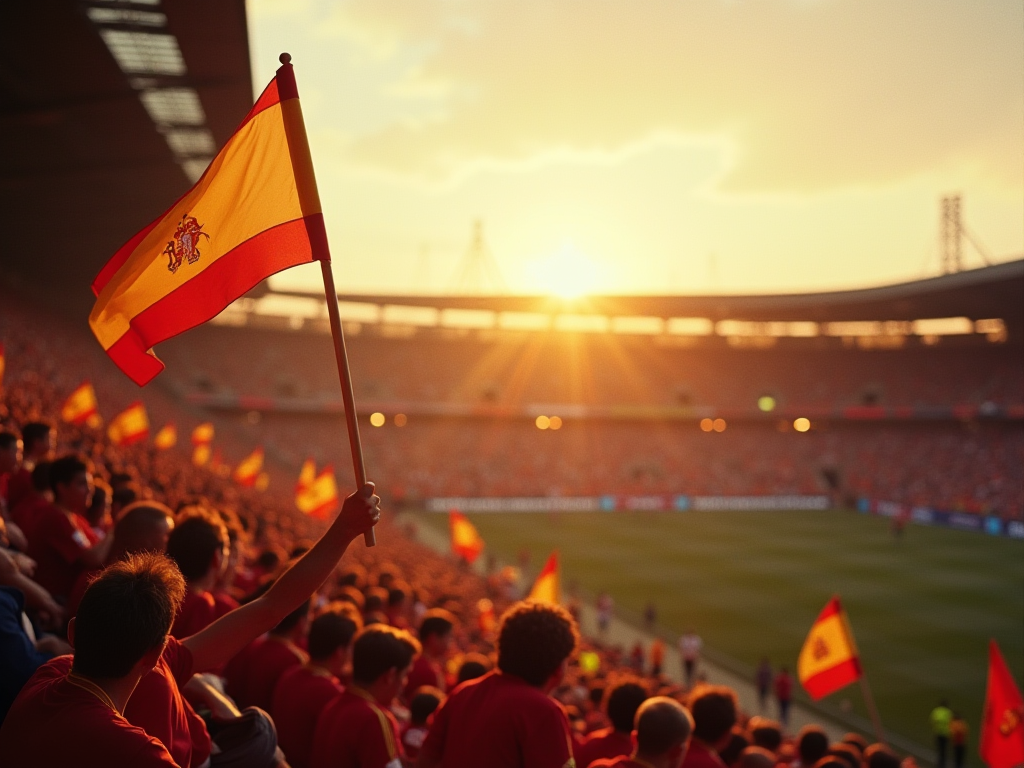
The tournament unfolded in an atmosphere of great anticipation, with Spanish fans rallying behind their national team. In the group stage, La Roja showcased their prowess by defeating Hungary and the Soviet Union, demonstrating an attractive and effective style of play. However, the real challenge came in the final, held at the Santiago Bernabéu Stadium in Madrid, where they faced the Soviet Union again, a team that had been one of the favorites for the title.
The final match was a tactical and emotional battle. La Roja, with impeccable collective play, managed to open the scoring with a goal from Jesús María Pereda, a moment that ignited euphoria among the fans. Despite the pressure applied by the Soviet team, who sought to equalize, the Spanish defense held firm. In the 84th minute, Marcelino García Toral sealed the victory with a goal that would be etched in the collective memory of supporters. The final whistle not only marked the win but also the beginning of a new era for Spanish football.
The Euro 1964 was not just a triumph on the field; it was a symbol of national unification. During a time when social divisions were still very present, La Roja's success brought Spaniards together around a sense of pride and belonging. This tournament laid the groundwork for the future of football in Spain, inspiring generations of players to come.
Today, as we look toward the 2026 World Cup, it is vital to remember those moments of glory, as the legacy of Euro 1964 remains alive in the heart of La Roja. History is not only told through trophies but also through the emotional connection that football creates in society. La Roja plays not only for the present; it plays for a glorious past, a promising future, and for every fan who has dreamed of seeing their national team shine on the world stage.